
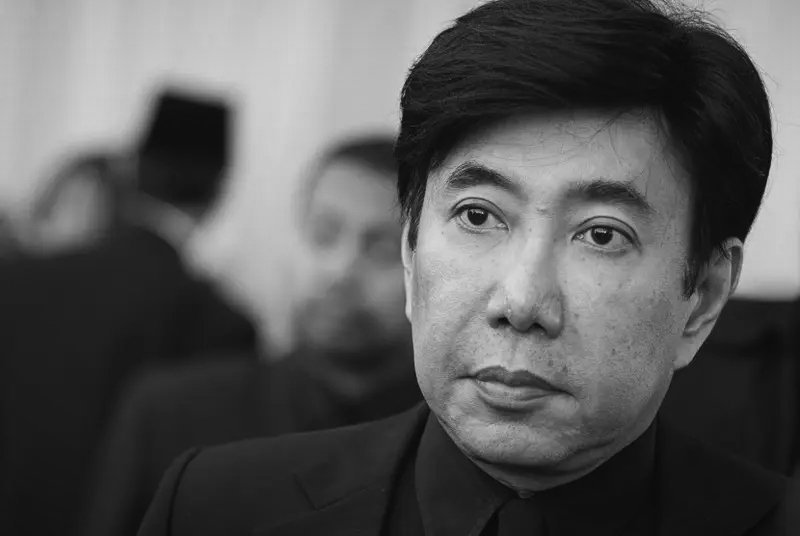
A Tribute to a Legendary Maestro
To be born under the shadow of a titan is both an inheritance and a sentence. For Mohammad Guruh Irianto Soekarno Putra, the surname was not merely a family handle, it was a monument. Sukarno did not simply govern Indonesia; he sculpted its post-colonial psyche, delivering speeches that vibrated like thunder across Merdeka Square and framing national pride as a theatrical imperative. To navigate the world as his youngest son meant confronting a suffocating paradox: any failure would be magnified, and any success would be attributed entirely to bloodline.
Yet, when the name Guruh echoed through the amphitheaters, radio frequencies, and living rooms of Indonesia in the late twentieth century, it did not carry the stale air of political nepotism. It carried the hypnotic resonance of a Balinese gamelan colliding with Moog synthesizers, the thunder of synchronized dance troupes, and the shimmering elegance of modern pop poetry. Guruh did not seek to escape his father’s shadow by retreating into obscurity, nor did he ride its coattails into political office. Instead, he claimed his independence on a different battlefield altogether: the stage. His mahakarya—his life’s ultimate masterpiece—was the creation of a distinct, unshakeable artistic identity that earned its reverence strictly on creative merit.
The Sonic Breakthrough: Guruh Gipsy (1976)
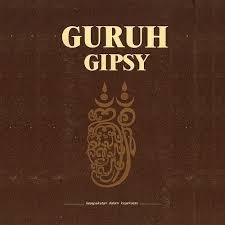
The landmark 1976 album Guruh Gipsy. Source: Alunan Nusantara
In 1976, Indonesian popular music was at a crossroads, caught between literal imitations of Western rock and conservative traditional folk. Guruh, alongside a collective of virtuosic young musicians including Chrisye, Keenan Nasution, and Abadi Soesman, shattered this binary with the release of Guruh Gipsy. The self-titled album was not a polite crossover or a gimmick; it was a radical, highly complex artistic manifesto.
Track by track—most famously in the monumental “Indonesia Maharddhika”—Guruh paired progressive rock signatures with the intricate, pentatonic tuning of Balinese Gamelan Pegongan. The album demanded meticulous technical precision from its performers, seamlessly interweaving polyrhythmic percussion with synth lines and soaring vocals. It was uncompromising, avant-garde, and intellectually demanding. Critics and music historians quickly realized this was not a vanity project funded by political privilege. Guruh Gipsy redefined what Indonesian pop music could achieve, establishing Guruh instantly as an auteur who possessed an elite command over both ethnic heritage and global modernism.
Swara Maharddhika and the Architecture of Spectacle
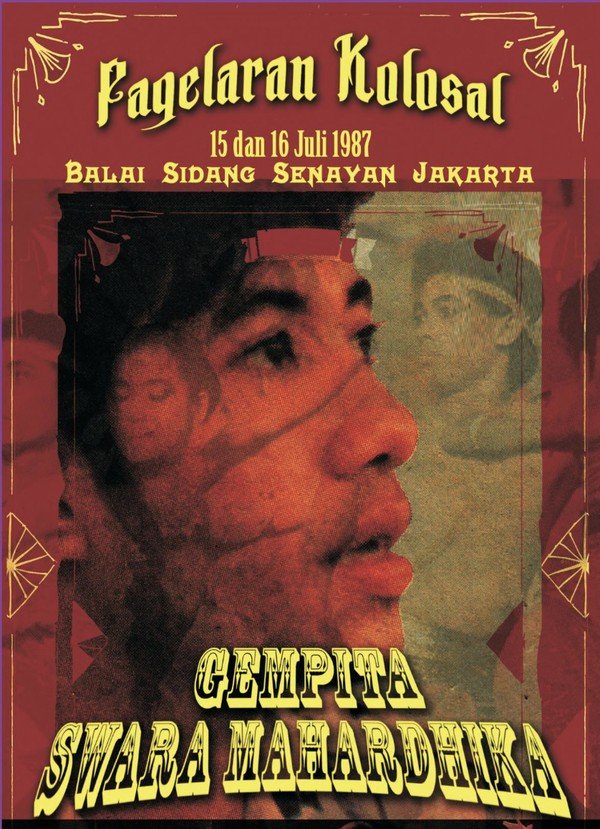
Gempita Swara Maharddhika colossal performance. Source: detikcom
If Guruh Gipsy established his musical mind, Swara Maharddhika—the performing arts collective he founded in 1977—proved his ability to command physical space and youth culture. Before Guruh, traditional Indonesian dance was frequently relegated to formal state receptions or preservationist archives, often viewed by the urban youth as static and archaic. Guruh dismantled this perception with Broadway-caliber discipline and pop grandeur.
Through Swara Maharddhika, Guruh brought thousands of young dancers into a regime of rigorous training, blending Javanese, Balinese, and Sundanese traditional movements with modern jazz, ballet, and theatrical staging. His colossal productions (Pagelarans) at Balai Sidang Senayan were not mere shows; they were cultural phenomena. Being a member of Swara Maharddhika became a coveted status symbol among Indonesian youth. Guruh transformed stagecraft into a discipline of national pride, constructing visual spectacles that rivaled any international revue while remaining fiercely rooted in local iconography.
Pop Modernism: Writing the Soundtrack of an Era
Beyond experimental compositions and colossal choreography, Guruh possessed an extraordinary talent for writing quintessential pop melodies. His collaborations with vocalists like Chrisye produced songs that became immortal pillars of Indonesian popular culture.
Compositions like “Zamrud Khatulistiwa” turned geographical identity into an irresistible, sun-drenched anthem. “Kala Cinta Menggoda” showcased his uncanny ability to blend romantic longing with intricate rhythmic structures that felt both familiar and fresh. In “Melati Suci” and “Renjana”, his lyrics bypassed the melodramatic clichés of the era, opting instead for poetic depth, refined diction, and rich metaphorical resonance.
Key Songs & Cultural Signifiers
- “Indonesia Maharddhika” (Guruh Gipsy, 1976): Epochal prog-rock and Balinese gamelan fusion; manifesto of cultural freedom.
- “Zamrud Khatulistiwa” (Chrisye – Sabda Alam, 1978): Celebratory pop poetry framing the Indonesian archipelago as an emerald haven.
- “Melati Suci” (Tika Bisono / Guruh, 1982): Reverent, orchestral tribute to maternal grace and purity.
- “Kala Cinta Menggoda” (Chrisye, 1997): Playful, syncopated pop masterpiece showcasing rhythmic mastery.
Guruh’s discography proved that commercial success did not require artistic dilution. His songs dominated airwaves and earned industry awards because they were structurally superior, melodically haunting, and impeccably produced.
The Aesthetic Transmutation of Nationalism
To fully appreciate Guruh’s sovereignty as an artist, one must contrast his brand of nationalism with that of his father. Sukarno’s nationalism was ideological, anti-colonial, and framed through political rhetoric—it was delivered from balconies and podiums to build a sovereign state.
Guruh’s nationalism, by contrast, was aesthetic, sensory, and cultural. He did not lecture his audience on unity; he made them feel it through synchronized movement and harmonious sound. Where the father used politics to define Indonesia’s borders, the son used art to illuminate its soul. By channeling his devotion to the country through gamelan keys, batik textiles, and stage lighting rather than political manifestos, Guruh claimed a domain where his father had no jurisdiction. He was not competing with the Proclaimer; he was translating the nation’s identity into a modern artistic vocabulary.
The Sovereign Legacy: An Eternal Requiem
A true mahakarya is rarely a single artifact—it is the sum total of an unyielding artistic life. With his passing on September 26, 2026, at the age of 73, Indonesia lost one of its most daring cultural architects. Yet, history will record that while the elder Soekarno built the physical foundations of a republic, Guruh gave that republic its rhythm, its color, and its modern aesthetic soul.
He earned his household name not through political inheritance, but through sweat, rehearsal halls, soundboards, and undeniable creative brilliance. In proving that heritage can be honored without being copied, Guruh Soekarno Putra stands forever sovereign—a titan who took the colossal name he was given, gave it an entirely new beat, and left behind an immortal legacy that will resonate across generations.




Leave a Reply