
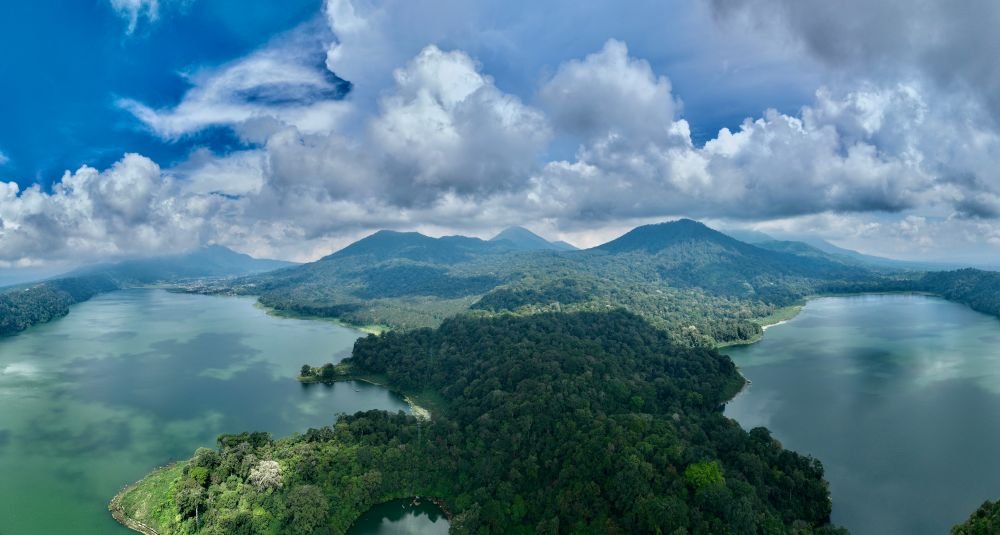
Beyond the beaches, Bali’s lakes reveal an older relationship with water, one rooted in spirituality, agriculture, landscape and the belief that water is life.
Bali is usually imagined through its coastline: temples perched above crashing waves, white sand beaches, sunset cocktails and the endless blue of the Indian Ocean. But travel inland, into the mountains, and another Bali begins to emerge. Here, water becomes quieter.
It gathers in volcanic craters, disappears into forests, feeds terraced rice fields and gathers around ancient temples. For the Balinese, water is never simply a natural resource. It is tirta, sacred water, associated with purification, fertility and the continuity of life.
This relationship runs deep through Balinese culture. The island’s subak irrigation system, recognised by UNESCO as part of Bali’s World Heritage cultural landscape, is built around the understanding that water connects nature, people and the spiritual world. Water temples regulate not only irrigation but also the rituals surrounding it.
It is perhaps no coincidence, then, that Bali’s four principal lakes, Batur, Beratan, Buyan and Tamblingan, are formally recognised as sacred lake areas under Bali’s spatial regulations. And while their spiritual significance is profound, these lakes are also some of the island’s most compelling landscapes.
DANAU BATUR
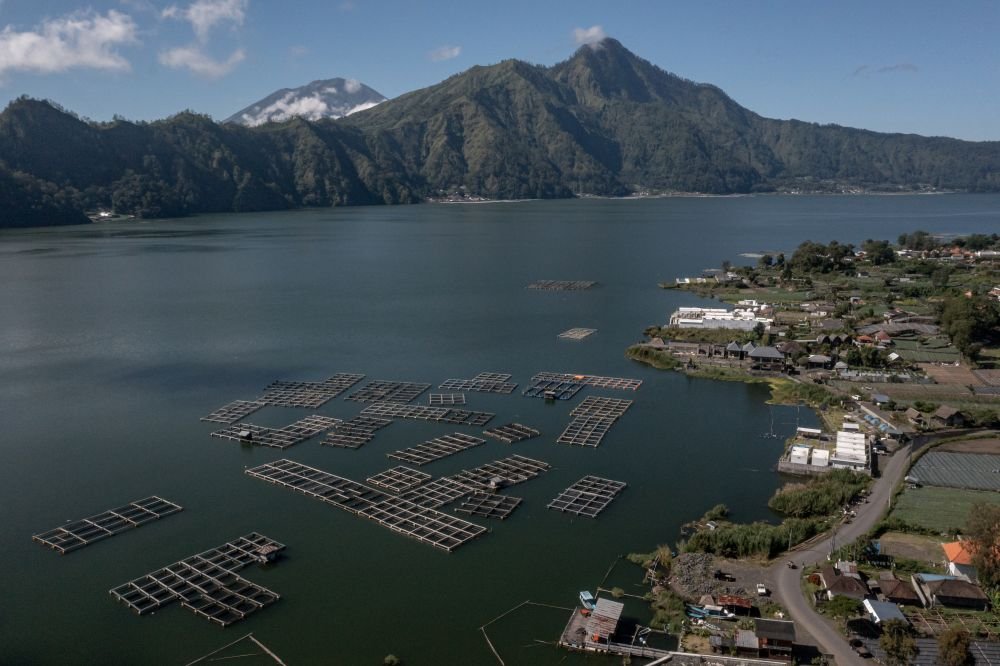
In Kintamani, Danau Batur sits inside the enormous caldera of Mount Batur, its blue-green waters framed by volcanic slopes and the dramatic contours of the surrounding highlands. It is Bali’s largest volcanic lake and one of the island’s most important sources of water and spiritual meaning. The lake is closely associated with Pura Ulun Danu Batur, dedicated to Dewi Danu, the goddess of lakes and rivers. The temple complex itself contains hundreds of shrines connected to water, agriculture and sacred springs.
For visitors, Batur offers an unusually expansive version of Bali. You can take in the lake from the surrounding hills, watch the changing light across the caldera, visit the temple complex or explore the villages that have developed around its shores. The area is also known for sunrise experiences and natural hot springs. But perhaps the most compelling reason to visit is perspective. At Batur, the relationship between mountain, lake, agriculture and religion is almost impossible to miss. The landscape itself explains why water occupies such an important place in Balinese life.
DANAU BERATAN
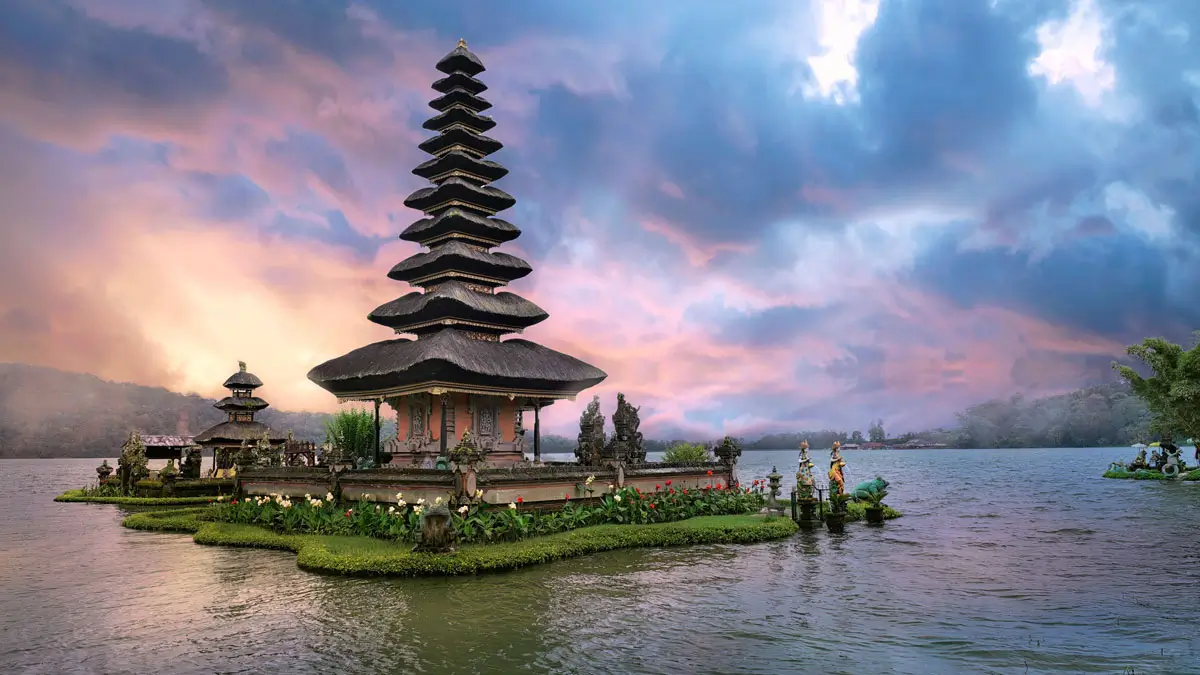
If Batur feels elemental, Beratan feels almost cinematic. Set at approximately 1,500 metres above sea level in the cool highlands of Bedugul, Danau Beratan is perhaps Bali’s most recognisable lake. Floating above its waters is Pura Ulun Danu Beratan, whose multi-tiered meru has become one of the defining images of the island.
The temple is dedicated to Dewi Danu, the goddess associated with water, lakes and rivers. Its presence is more than decorative. The lake is an important source of irrigation for surrounding agricultural areas, making the spiritual and practical value of the water inseparable.
Come early, when mist hangs over the lake and the mountains appear almost suspended behind the temple. Take a traditional boat onto the water, walk through the temple grounds or simply sit beside the lake and watch the landscape change with the weather. Beratan is popular, but its popularity does not diminish its atmosphere. There is a reason this particular landscape has become one of Bali’s visual signatures.
DANAU BUYAN
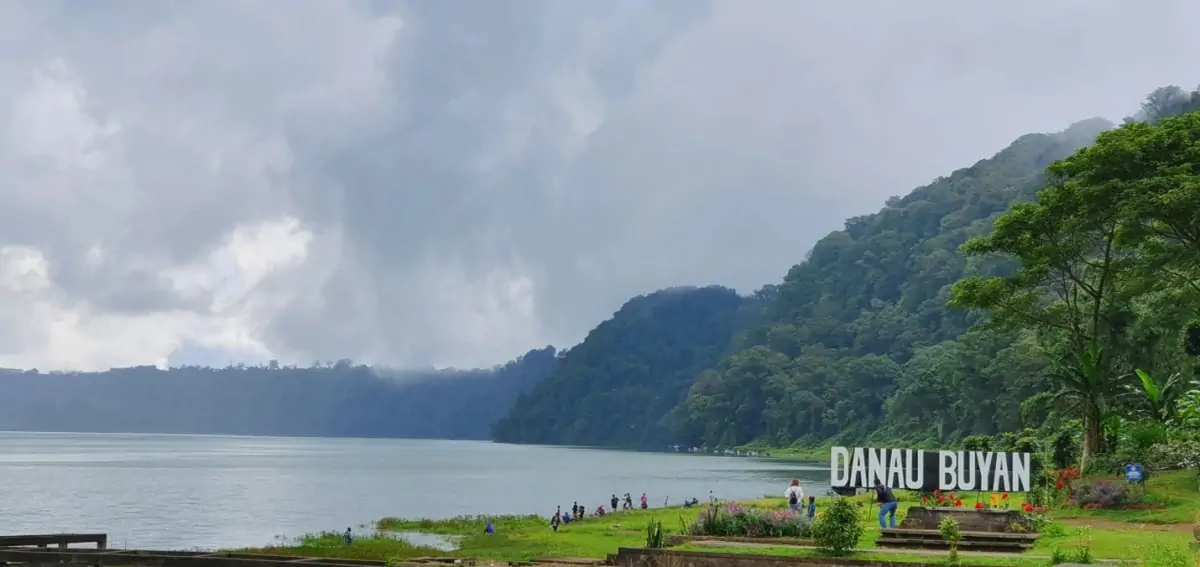
Not far from Beratan, the atmosphere changes. Danau Buyan is quieter, greener and considerably more understated. Surrounded by forest and steep highland slopes, it belongs to Bali’s northern lake country, where mornings can arrive wrapped in mist and the air feels noticeably cooler.
Buyan is particularly appealing to travellers looking for Bali away from the beach clubs and busy southern corridor. The lake is a natural setting for camping, photography, trekking and simply spending time outdoors. Its importance, however, goes beyond recreation. Buyan forms part of the Buyan-Tamblingan conservation landscape, where forest, mountain and water exist as one interconnected ecosystem. More than 20 temples and sacred shrines are scattered throughout the wider area, including Pura Ulun Danu Buyan and Pura Ulun Danu Tamblingan.
The experience here is more about slowing down. Find a viewpoint. Watch the clouds move over the water. Let the forest do most of the talking.
DANAU TAMBLINGAN
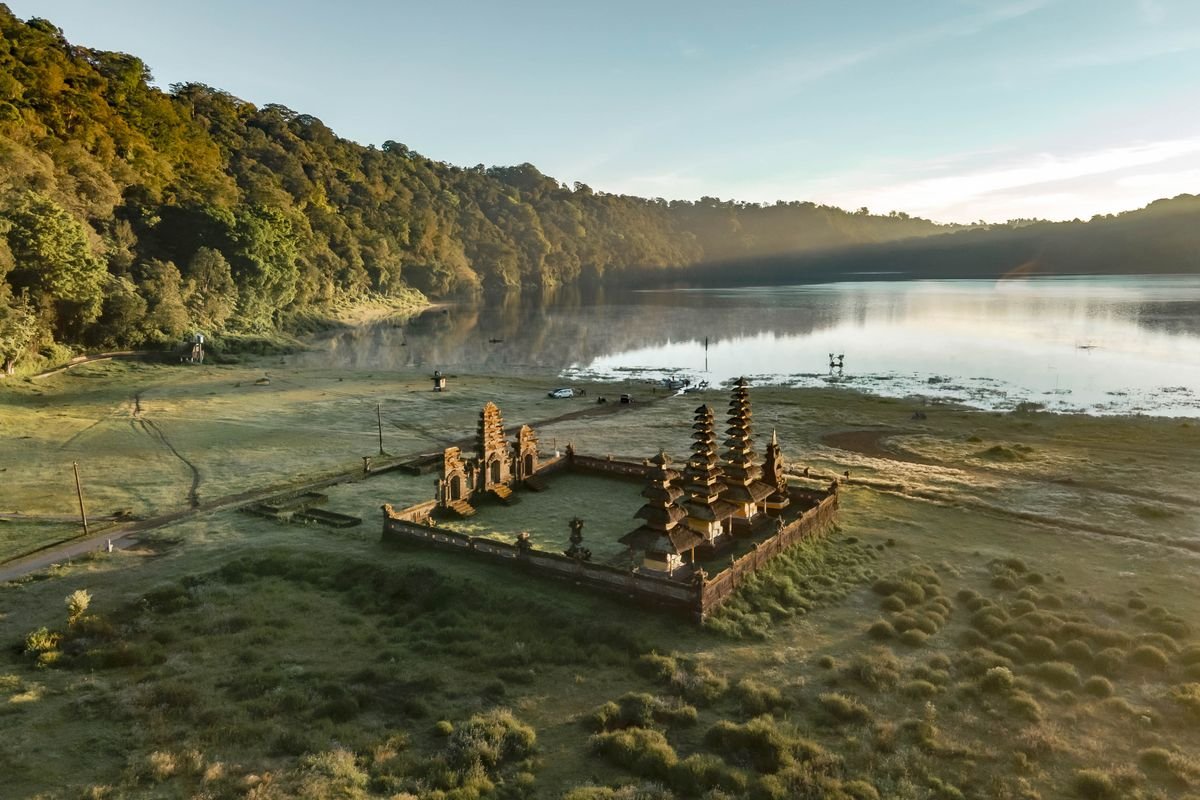
If Buyan is quiet, Tamblingan is contemplative. The two lakes sit side by side beneath the Munduk highlands, separated by a forested ridge. Yet Tamblingan has developed an identity of its own. It is smaller, more secluded and surrounded by a landscape where ancient forest and sacred sites remain particularly prominent.
Traditional boats still cross its waters, while temples and shrines are scattered through the surrounding forest. The absence of large-scale development is part of its appeal. For travellers interested in Bali’s spiritual landscape, Tamblingan may be the most rewarding of the four.
There is something particularly powerful about encountering a temple here without the visual language of a conventional tourist attraction. The forest, the lake and the shrines seem to belong to the same landscape rather than existing separately. And that is perhaps closer to the Balinese understanding of sacred space: nature is part of spirituality.
THE WATER THAT HOLDS BALI TOGETHER
In Bali, water moves through almost every layer of life. It irrigates rice fields. It sustains communities. It becomes tirta in religious ceremonies. It determines where agriculture can flourish. It gathers around temples dedicated to the deities associated with water and fertility.
The philosophy of Tri Hita Karana, which places harmony between the spiritual world, human society and nature at the centre of Balinese life, is particularly visible in this relationship. UNESCO describes the island’s subak system as a living expression of that philosophy, with water temple rituals helping communities maintain a relationship with the natural forces on which agriculture depends.
That is why visiting a Balinese lake can feel different from visiting a beautiful body of water elsewhere. You are looking at infrastructure, mythology, agriculture, ritual and ecology occupying the same space. They offer something the island’s increasingly crowded southern destinations struggle to provide: stillness with meaning.
Batur offers scale. Beratan offers iconography. Buyan offers wilderness. Tamblingan offers contemplation. Yeh Malet offers discovery. Together, they tell a quieter story about Bali.


Leave a Reply